Africa's Most Profound
Human Encounter
Lake Eyasi is not a conventional safari destination. There are no elephants, no Serengeti plains, no big cat sightings. What Lake Eyasi offers instead is something rarer and arguably more profound than any wildlife encounter — direct, respectful contact with the Hadzabe, one of the world's last remaining hunter-gatherer peoples, whose way of life stretches in an unbroken line back tens of thousands of years.
The lake itself — a shallow, alkaline soda lake in the floor of the Great Rift Valley, south of the Ngorongoro Highlands — is remote, ancient, and largely unchanged by the modern world. The Hadzabe have lived on its shores for millennia, hunting with handmade bows and arrows, gathering berries and tubers, and sleeping under the stars in temporary shelters of branches and grass. They are a window into the deep past of our species — and an encounter with them is among the most genuinely transformative experiences available to any traveller anywhere in the world.
For Tanzania Bespoke Expeditions, Lake Eyasi is an optional but deeply powerful addition to a northern circuit safari — typically added as a 1–2 night detour from Karatu, between Ngorongoro and the Serengeti. Clients who include it describe it as the single most memorable experience of their entire journey.
The quality of a Lake Eyasi visit depends almost entirely on the guide and the operator who arranges it. We work exclusively with licensed local Hadzabe community liaisons who have deep, long-standing relationships with specific family groups — ensuring the visit is genuine, respectful, and fairly compensated. We never use operators who treat the Hadzabe as a tourist attraction. This is a relationship built on mutual respect, and it shows in every visit we arrange.
The Last Hunter-Gatherers
of Africa
A People Apart —
Living as Our Ancestors Did
The Hadzabe (or Hadza) are one of the last populations on Earth to maintain a genuinely hunter-gatherer lifestyle. There are approximately 1,000–1,300 Hadzabe remaining, of whom roughly 300–400 live the traditional life around Lake Eyasi — hunting with handmade bows and foraging for wild honey, berries, and tubers, exactly as their ancestors have done for at least 10,000 years.
Their language is one of the most ancient on Earth — a complex click-consonant tongue that belongs to no other known language family, suggesting the Hadzabe represent a very deep and linguistically isolated branch of the human family tree. Genetic studies support this, placing the Hadzabe among the populations most deeply diverged from the common ancestor of all modern humans.
The Hadzabe do not practise agriculture, do not keep livestock, have no chiefs or formal hierarchy, and make all decisions by consensus. They live lightly on the land — moving camp several times a year as resources shift — and have done so, apparently successfully, for longer than any farming civilisation has existed.
A Day with
the Hadzabe
A well-arranged Lake Eyasi experience follows a specific rhythm — one that honours both the Hadzabe way of life and the genuine curiosity of visitors. This is not a performance. The Hadzabe go about their morning routines, and you accompany them with a licensed community guide and a respectful interpreter.
Departing before sunrise, your guide leads you to the Hadzabe camp at the lake's edge — where the community is already stirring, fires being lit, and hunters checking their bows and arrows by firelight. The early start is deliberate: dawn is when the Hadzabe hunt, and witnessing them prepare is part of the experience's power.
Accompanying Hadzabe hunters through the bush at dawn is the heart of the experience. Moving silently through scrub and acacia woodland, hunters track birds, small mammals, and baboon using exceptional tracking skills and handmade bows. You walk with them, observe their communication in whispered clicks, and witness a precision of movement and knowledge of the environment that is humbling in its depth. No two mornings are ever the same.
Returning to camp, the rhythm of daily life resumes — women preparing food, children playing, elders making tools. You are invited to try traditional fire-making by friction, attempt shooting a bow, and observe the production of the poison-tipped arrows that are the Hadzabe's primary hunting tool. The interaction is genuine, unhurried, and deeply human.
A short drive brings you to a Datoga community — the semi-nomadic pastoralists who have long coexisted with the Hadzabe as trading partners. The Datoga are master ironworkers, forging arrowheads, bracelets, and metal tools using ancient smelting techniques. Watching a Datoga blacksmith work is a direct link to a pre-industrial craft tradition that has barely changed in centuries.
The afternoon brings a complete change of pace — a canoe on the still, soda-water surface of Lake Eyasi as the sun sinks toward the Rift Valley escarpment. Flamingo turn the lake pink, African fish eagles call from their perches, and the sky performs the kind of sunset that only remote, unlit landscapes can produce. This is Lake Eyasi at its most visually extraordinary.
Tanzania's Ancient
Ironsmith Pastoralists
Masters of Fire &
Iron Since Before Memory
The Datoga (also known as Mang'ati or Barabaig in different regions) are a Nilotic people who have inhabited the Rift Valley of Tanzania for centuries. Unlike the Hadzabe, they are semi-nomadic pastoralists — cattle herders whose wealth and identity are deeply intertwined with their livestock.
The Datoga are celebrated throughout northern Tanzania as exceptional ironworkers. Their blacksmiths — working with bellows, charcoal, and hammers passed down through generations — produce the arrowheads that the Hadzabe buy and use, as well as bracelets, rings, and tools traded across the region. A Datoga smithy in operation is one of the most evocative traditional craft experiences in East Africa.
- Semi-nomadic cattle herders of Nilotic origin
- Renowned throughout Tanzania for iron-forging skill
- Supply arrowheads to the Hadzabe as trading partners
- Traditional beadwork and scarification mark identity
- Speak Datooga — a Southern Nilotic language
Flamingo, Birds
& the Alkaline Shore
Lake Eyasi is a shallow, seasonally fluctuating alkaline soda lake — one of a chain of Rift Valley lakes that includes Natron and Manyara. While it does not host the same volume of wildlife as Tanzania's national parks, the lake and its surrounding bush deliver genuinely rewarding birding, impressive flamingo concentrations, and the kind of raw, unmediated wilderness that is increasingly rare even in East Africa.
Birds of Lake Eyasi
- Lesser & greater flamingo — lake shore colonies
- African fish eagle — nesting pairs on shore trees
- Grey-crowned crane — grassland and lake edge
- Kori bustard — open plains near the lake
- Marabou stork — large groups at water's edge
- Yellow-necked spurfowl — common in bush areas
- Various waders, egrets, herons, and ibis
Wildlife Around the Lake
- Olive baboon — large troops in the bush
- Vervet monkey — common near the shoreline
- Porcupine — nocturnal, seen on night walks
- Dik-dik — in the dense scrub areas
- African wildcat — rare but present
- Hyena — often heard at night from camp
- Various raptors — circling the lake thermals


Best Time to Visit
Lake Eyasi
Lake Eyasi can be visited year-round, but the dry season offers the most comfortable conditions for bush walking with the Hadzabe and the clearest access roads to the remote lake shore. The wet season creates a dramatically beautiful landscape but can make some tracks impassable without high-clearance 4WD.
Jun – Oct: Dry Season
The preferred time — dry bush tracks, comfortable temperatures for pre-dawn walks, and reliable access to the lake shore for the canoe safari. The Hadzabe hunting season is most active when prey is concentrated near water. Flamingo numbers begin to build as the lake level falls and the shoreline shallows concentrate birds.
Nov – Mar: Green & Wet Season
The landscape is dramatically lush after the rains — verdant bush, wildflowers, and a lake that expands significantly. Bird watching is excellent. The Hadzabe experience remains deeply rewarding in this season, though dawn walks are cooler and the bush is denser. Road access to the lake can require high-clearance 4WD and local knowledge of which tracks are passable.
What to Do at
Lake Eyasi
The defining experience of Lake Eyasi — accompanying Hadzabe hunters through the pre-dawn bush, observing tracking, communication in click language, and the remarkable intimacy of a people entirely at home in a landscape that would disorient most visitors completely. Arranged exclusively through our licensed community partners.
Paddling the still, rose-tinted surface of Lake Eyasi at sunset — flamingo wading in the shallows, African fish eagles calling, the Rift Valley escarpment turning amber behind you — is one of the most peaceful and visually beautiful experiences we offer in all of northern Tanzania.
A visit to a Datoga ironsmith workshop — watching traditional iron-smelting and forging techniques that have been practised for centuries — provides essential cultural context for the Hadzabe encounter. The Datoga are the Hadzabe's ironmongers, and understanding their relationship adds depth to the whole experience.
The lake shore and surrounding bush deliver rewarding birding for any level of interest — from the spectacle of flamingo flocks to African fish eagle displays, grey-crowned crane in the grassland, and a variety of waders, raptors, and passerines in the acacia scrub surrounding the lake.
Lake Eyasi has almost zero light pollution — the Milky Way is visible with naked eyes as a dense band of light from horizon to horizon. Sitting around the campfire at a remote lakeside camp, listening to hyenas in the darkness and watching the African sky, is an experience of profound stillness.
Lake Eyasi offers extraordinary photographic opportunities — the Hadzabe at dawn, flames of the blacksmith's forge, flamingo at the water's edge, and the vast Rift Valley landscape. Our guides advise on etiquette, timing, and positioning for every element of the cultural encounter. Permission is always sought first from the communities.
Camps & Lodges at
Lake Eyasi
Lake Eyasi's accommodation is intentionally small-scale — matching the remote, intimate character of the destination. The finest properties are positioned directly on the lake shore, combining genuine wilderness atmosphere with genuine comfort. We have personally visited every property we recommend and ensure each delivers on both the cultural experience and the quality of stay.
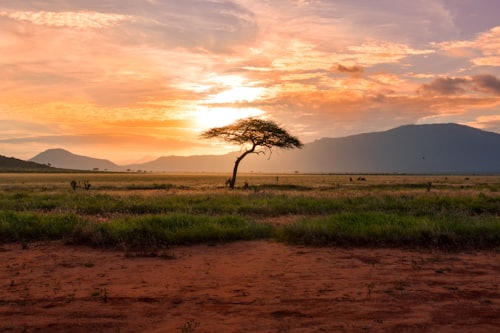

We always recommend at least one night directly on the Lake Eyasi shore rather than staying in Karatu and day-tripping. The ability to be at the Hadzabe camp at first light — before the heat builds and the morning hunting window closes — requires staying close. Lakeside camps also offer the evening canoe experience and the extraordinary night sky that makes the Lake Eyasi stay genuinely memorable beyond the cultural encounters.
Practical Guide to
Visiting Lake Eyasi
Getting There
Lake Eyasi is approximately 4–5 hours from Arusha via the Ngorongoro highlands, passing through Karatu town. The final 20–30km to the lake shore is on unpaved track requiring a 4WD vehicle. There is no airstrip at Lake Eyasi — access is exclusively by private 4WD vehicle. Most visitors position Lake Eyasi as an overnight stop between Ngorongoro and the Serengeti on the northern circuit.
Cultural Etiquette
- Always ask your guide before taking photographs of individuals
- Do not give gifts directly to children — this disrupts community dynamics
- Follow your guide's lead on pace and behaviour in the bush
- Speak quietly during the morning hunt — noise scares prey
- Appreciate that this is a real community, not a performance
- A fair contribution directly to the community is arranged by us
Combining with the Circuit
The most natural position for Lake Eyasi in a northern circuit itinerary is between Ngorongoro and the Serengeti — using Karatu as a base and adding 1–2 nights at the lake. The detour adds real depth to the cultural dimension of any Tanzania safari and provides a dramatic contrast to the pure wildlife focus of the rest of the circuit.
What to Pack
- Sturdy closed-toe shoes for dawn bush walks
- Warm layer for pre-dawn walks — mornings can be cold
- Camera with silent mode and a long zoom lens
- Insect repellent — the lake shore has mosquitoes at dusk
- Neutral clothing — avoid bright colours for the hunting walk
- Small torch for moving between camp and the lake at night
Lake Eyasi
Questions Answered
The Hadzabe (also called Hadza) are one of the world's last surviving hunter-gatherer peoples — approximately 1,000–1,300 individuals who live around Lake Eyasi in Tanzania's Rift Valley. They have maintained their traditional lifestyle — hunting with handmade bows and arrows, gathering wild berries, honey, and tubers — for at least 10,000 years. Their click-consonant language belongs to no other known language family, suggesting a very deep and ancient lineage. The Hadzabe represent a direct, living connection to the way of life that all humans shared before the invention of agriculture approximately 10,000 years ago.
This is the most important question to ask — and the answer depends entirely on how the visit is arranged. Irresponsible visits are exploitative — treating the Hadzabe as a zoo exhibit, underpaying or not paying the community, and creating dependency. Responsible visits, properly arranged, are ethical and mutually beneficial — fair community payments fund Hadzabe land rights advocacy, visits are conducted on the community's terms, and interaction is genuine rather than staged. We work exclusively with licensed community liaison guides who have long-standing, trust-based relationships with specific Hadzabe family groups. We are transparent about how community payments are distributed, and we never arrange visits without the community's explicit agreement on the day.
The dry season from June to October offers the most comfortable conditions — dry bush tracks, pleasant temperatures for pre-dawn walking, and reliable road access. November to March brings lush scenery, excellent bird watching, and high flamingo numbers on the lake, but some tracks can become challenging. The Hadzabe cultural experience is available and rewarding in all seasons — the community's life does not follow tourist seasons.
The Datoga are semi-nomadic cattle herders and master ironworkers who live around Lake Eyasi alongside the Hadzabe, with whom they have a long-standing trading relationship — the Datoga forge the metal arrowheads that the Hadzabe use for hunting. A visit to a Datoga blacksmith workshop — watching the ancient iron-smelting and forging process — provides important cultural context for understanding the whole Lake Eyasi community ecosystem. The two visits together give a complete picture of this extraordinary region's human landscape.
Lake Eyasi is approximately 4–5 hours from Arusha by private 4WD vehicle, via the Ngorongoro highlands and Karatu town. There is no commercial airstrip at the lake — all access is by road. The final section of track to the lake shore requires a high-clearance 4WD vehicle, particularly in the wet season. We arrange all private 4WD transfers as part of every Lake Eyasi itinerary.
Absolutely. Lake Eyasi has a small collection of genuinely excellent luxury tented camps positioned on the shore — combining proper comfort (good beds, great food, private facilities) with the authentic remoteness that makes this destination so powerful. The combination of a lakeside luxury camp, a pre-dawn Hadzabe hunting walk, a Datoga visit, and a sunset canoe is one of our most compelling 1–2 night additions to any northern circuit itinerary. Clients who include Lake Eyasi consistently rank it among the most memorable experiences of their entire journey — often above the Serengeti.