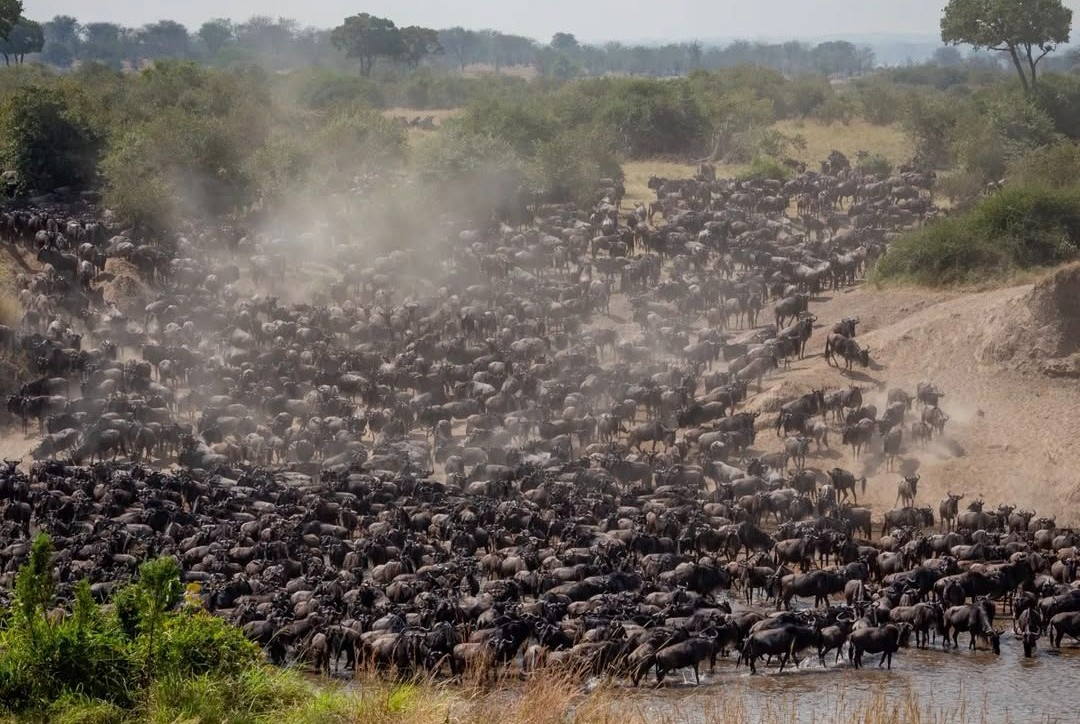
The Serengeti is not merely a national park — it is the oldest and largest in Tanzania, a UNESCO World Heritage Site, and arguably the most famous wildlife sanctuary on the planet. Its name derives from the Maasai word Siringet, meaning "the place where the land runs on forever" — a fitting description for a landscape of such scale and drama that it has captivated explorers, filmmakers, and travelers for generations.
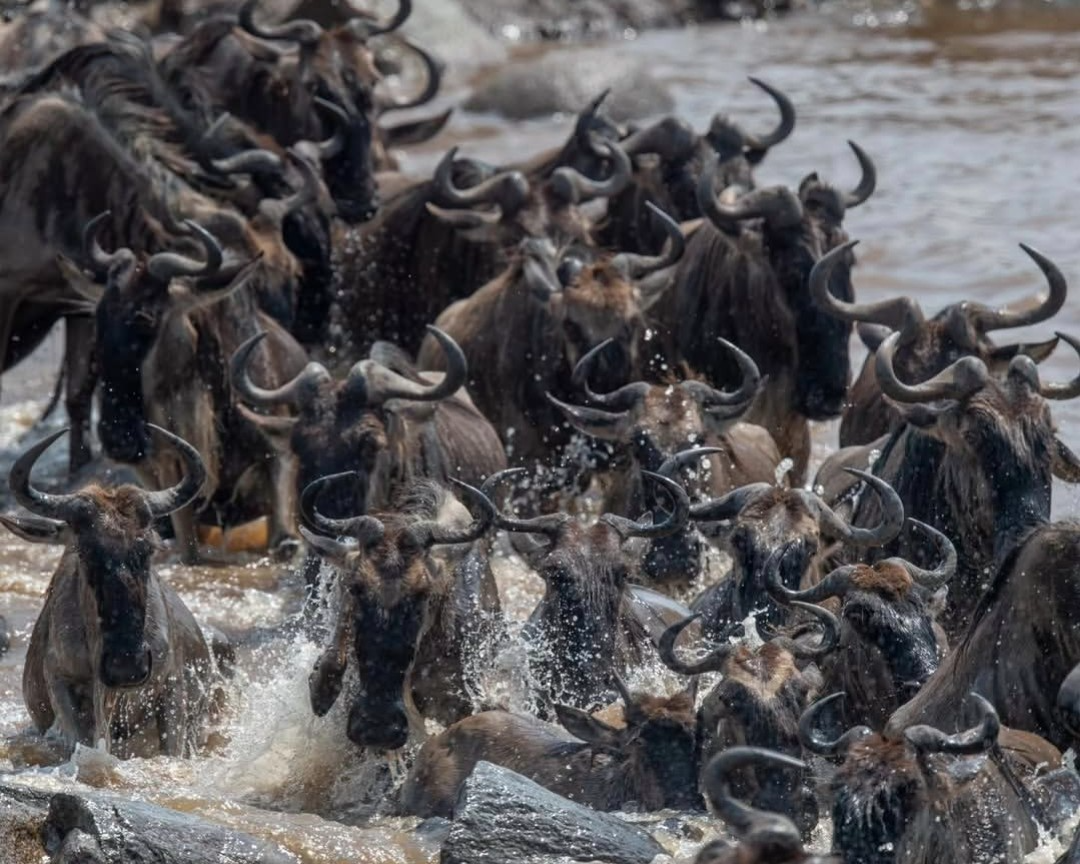
Spanning 14,750 square kilometers of protected wilderness in northern Tanzania, the Serengeti ecosystem extends far beyond its official boundaries. It flows north into Kenya's Maasai Mara National Reserve, west toward Lake Victoria, and south to the Ngorongoro Conservation Area. This vast, interconnected landscape forms the stage for the largest terrestrial mammal migration on Earth — the Great Migration — a perpetual circular journey of over 1.5 million wildebeest, 200,000 zebras, and 300,000 Thomson's gazelles driven by ancient instinct and the relentless search for fresh grazing and water.
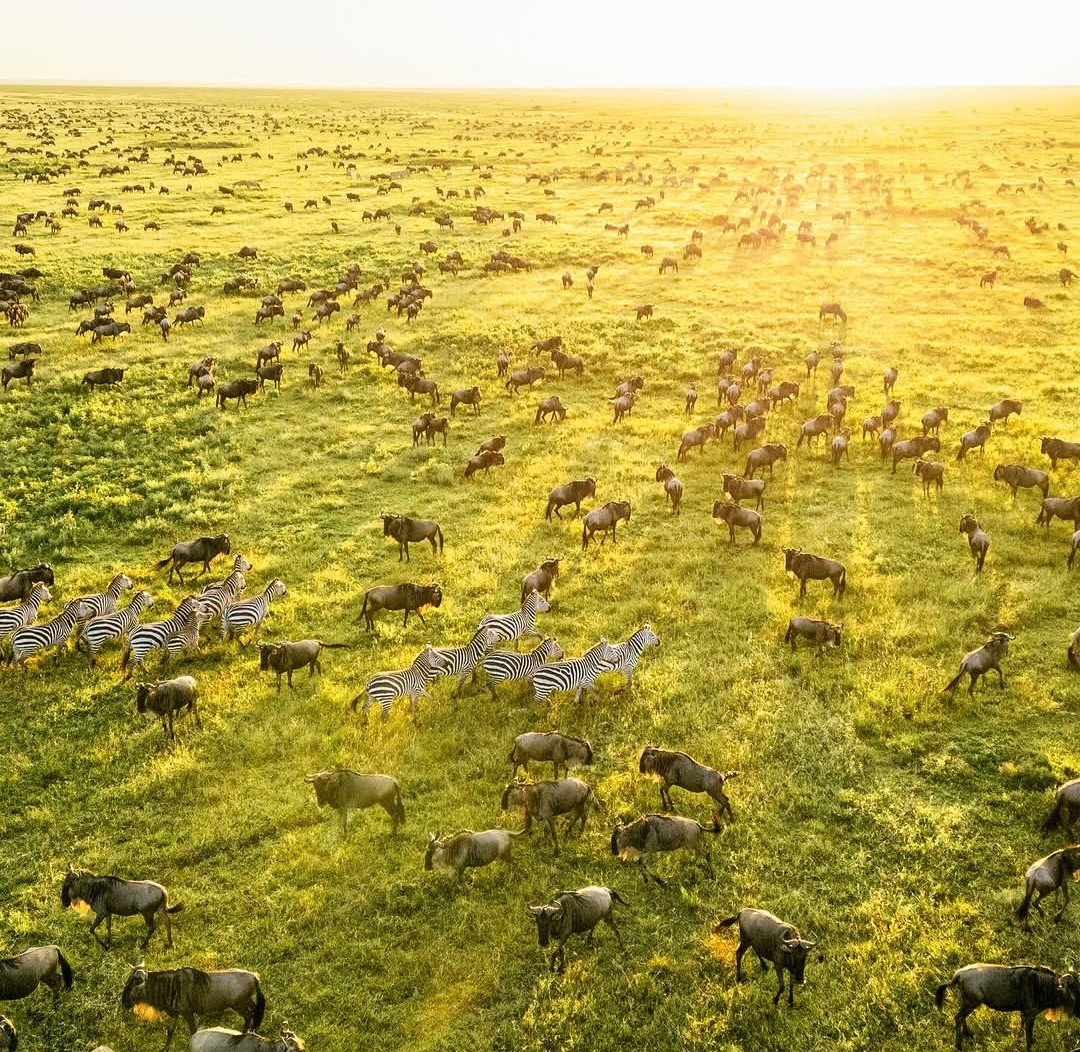
The Great Migration — over 1.5 million wildebeest and 200,000 zebras move in a continuous cycle through the Serengeti ecosystem.
The Great Migration: Nature's Greatest Spectacle
There is nothing else on Earth that compares to witnessing the Great Migration firsthand. The sheer volume of animals is overwhelming — a living river of wildebeest stretching from horizon to horizon, the air filled with the constant lowing of cows calling to their calves, the dust rising in golden columns visible for miles. It is a spectacle of life and death played out daily, with predators — lions, leopards, cheetahs, and hyenas — shadowing the herds at every turn.
The migration follows a predictable seasonal pattern, though exact timing varies with rainfall. From January through March, the herds concentrate in the southern Serengeti and Ndutu region, where the nutrient-rich short-grass plains provide ideal conditions for calving. During an intense three-week window, approximately 500,000 calves are born — a staggering 8,000 per day. This mass calving attracts an extraordinary concentration of predators, making it one of the most action-packed times to visit. For travelers seeking to witness the calving season, our 5-day Ndutu Calving Season Safari positions you directly in the heart of the action, while the 7-day Calving Season Luxury Safari includes premium lodges and extended game viewing across multiple regions.
As the rains end in April and May, the herds begin their long trek northwest toward the Grumeti River and into the Northern Serengeti. By July, they reach the Mara River — the most dramatic and photographed stage of the entire migration. Here, wildebeest must cross crocodile-infested waters in a desperate, chaotic scramble that has become the defining image of African wildlife. Our 3-day Mara River Crossing Safari is a fly-in express option for travelers short on time, while the 7-day Mara River Crossing Experience provides a comprehensive northern Serengeti immersion with multiple days of crossing opportunities. The crossings continue through October, after which the herds begin their return journey south as the short rains arrive in November.
Best times to witness the Great Migration: Calving season in Ndutu (January–March), Grumeti River crossings (May–July), and the dramatic Mara River crossings in the Northern Serengeti (July–October). Our safari specialists can time your visit precisely to match the migration's movements.
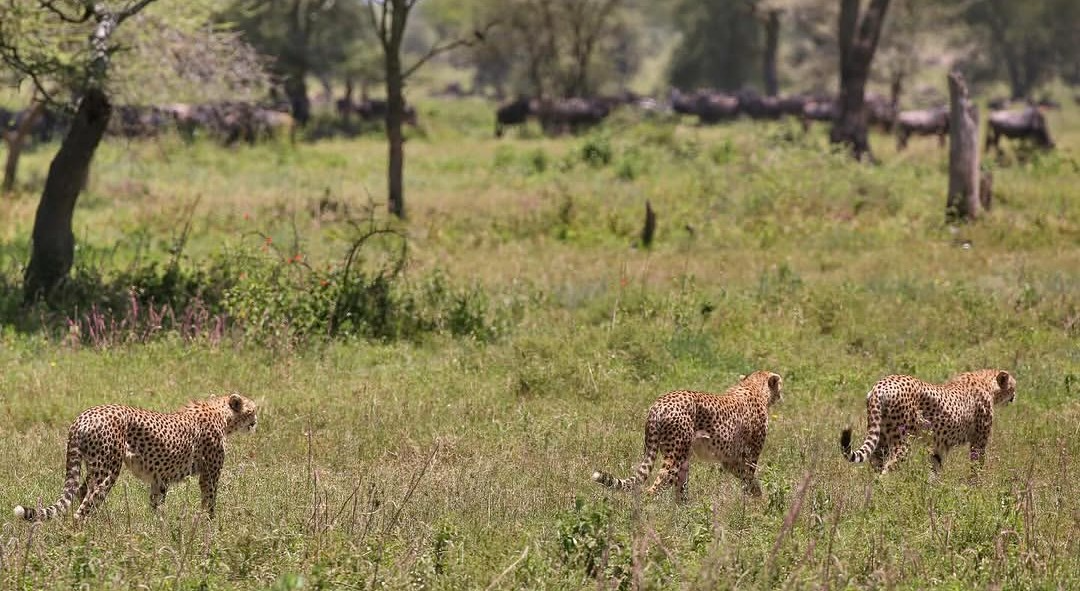
The Serengeti is home to Africa's richest concentration of large predators — lions, leopards, cheetahs, and spotted hyenas thrive across its diverse landscapes.
Beyond the Migration: Wildlife Year-Round
While the Great Migration rightfully commands the spotlight, the Serengeti offers exceptional game viewing in every season and in every corner of the park. The Big Five — lion, leopard, elephant, buffalo, and the rare black rhinoceros — are all present, alongside an astonishing diversity of other mammals and birds.
The Central Serengeti, particularly the Seronera River Valley, is renowned as one of the best places in Africa to see large predators. The permanent water source supports resident populations of lions, leopards, and cheetahs year-round. It is not uncommon to see all three big cats in a single day's game drive — a feat few other parks can match. The Seronera area is also home to the Serengeti's largest population of leopards, often spotted draped elegantly over the branches of sausage trees along the river.
The park supports over 530 bird species, from the enormous ostrich and ground hornbill to the elegant secretary bird and countless raptors. The granite kopjes — ancient rock outcrops that dot the plains — create microhabitats for specialized species like the rock hyrax, agama lizards, and klipspringer antelope. These kopjes also serve as favored resting spots for lions, offering shade and a commanding view of the surrounding plains. For those interested in combining multiple parks, our 6-day Tarangire, Ndutu and Serengeti safari traverses several distinct ecosystems for maximum wildlife diversity.
In the private Grumeti Game Reserve, located in the western corridor of the Serengeti ecosystem, visitors can enjoy exclusive experiences unavailable in the main national park — including night game drives that reveal a completely different cast of nocturnal wildlife, from porcupines and aardvarks to hunting leopards and spotted hyenas. Walking safaris with armed rangers and Maasai guides offer an intimate, ground-level perspective that transforms your understanding of the bush.
The Landscape: A Diversity of Habitats
Contrary to popular imagination, the Serengeti is not simply an endless flat grassland. It encompasses a remarkable diversity of landscapes that shift dramatically as you move through the ecosystem. The southern plains are precisely that — vast, treeless expanses of short grass that appear almost lunar in their openness during the dry season. This is where the wildebeest calve, where cheetahs hunt at full speed, and where the horizon seems to curve with the earth.
Moving north, the landscape transitions into open savanna dotted with acacia woodlands and the distinctive granite kopjes. The Seronera region features riverine forest along its watercourses, providing habitat for leopards and a rich variety of birdlife. Further north still, the land becomes more rugged and hilly as it approaches the Kenyan border, with the Mara River cutting a deep, forested channel through the terrain. Our 8-day Great Migration Safari is designed to traverse all these diverse landscapes, following the herds through multiple habitat zones.
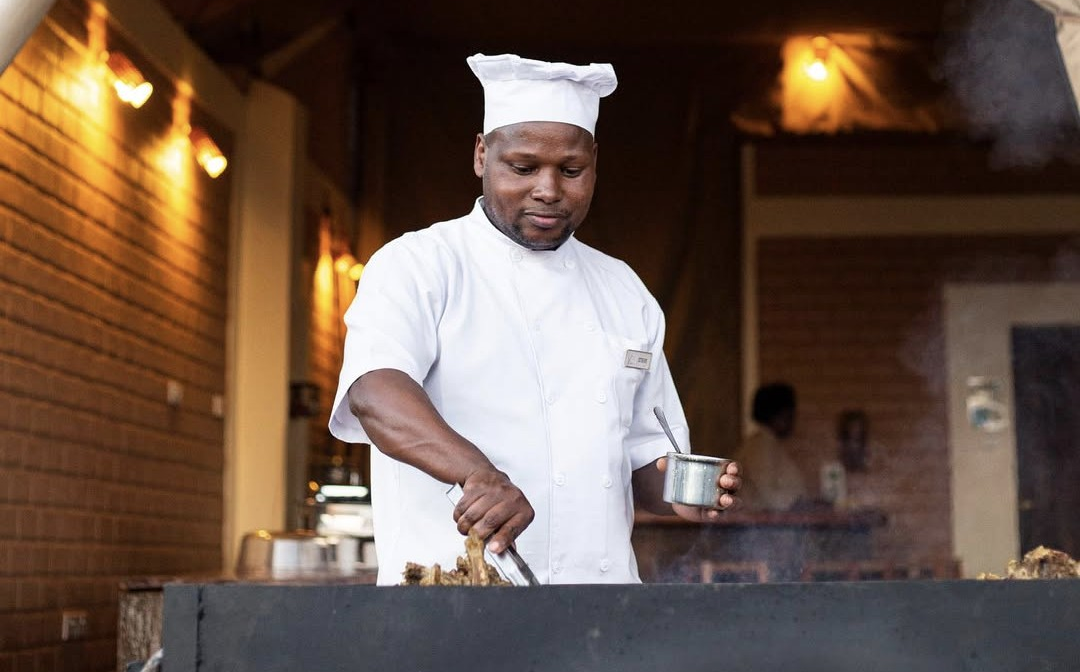
Luxury tented camps and lodges throughout the Serengeti offer sophisticated comfort with uninterrupted views of the surrounding wilderness.
Where to Stay: Serengeti Accommodation
The Serengeti offers an extraordinary range of accommodation options, from ultra-luxury lodges and permanent tented camps to seasonal mobile camps that follow the migration. The level of comfort and sophistication available in even the most remote corners of the park is remarkable — fine dining under the stars, four-poster beds with Egyptian cotton linens, private plunge pools overlooking waterholes frequented by elephants, and personal butler service are all within reach.
The Four Seasons Serengeti, located in the heart of the Central Serengeti, offers a world-class luxury experience with an infinity pool overlooking a waterhole, a spa, and gourmet dining. In the remote Northern Serengeti, &Beyond Klein's Camp occupies a private concession that permits night drives and walking safaris — activities not allowed in the main national park. One Nature Nyaruswiga, also in the central region, provides opulent tented accommodation with private decks from which wildlife can be watched wandering past.
Experiences Beyond the Game Drive
A Serengeti safari offers far more than game drives. The hot air balloon safari at dawn is arguably the definitive Serengeti experience — floating silently above the plains as the sun rises, watching the migration spread out below you in all directions, followed by a champagne breakfast served on the savanna. It is unforgettable, and for many travelers it represents the absolute highlight of their African journey.
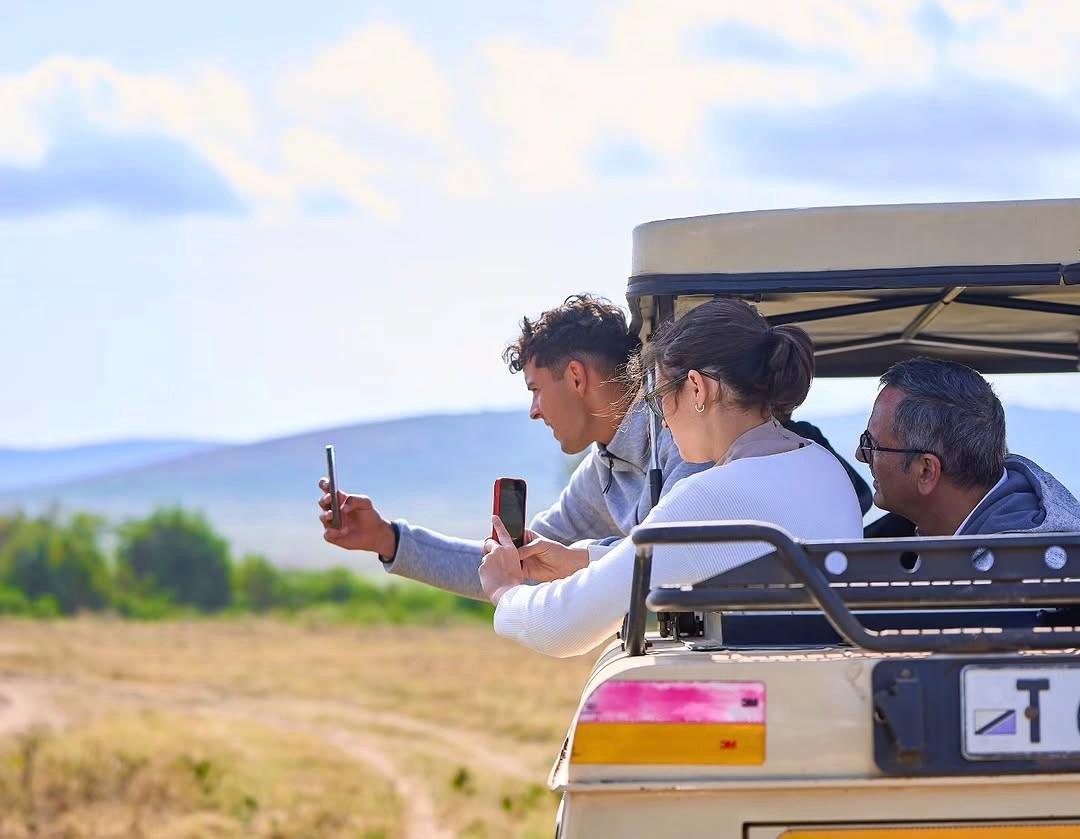
Photographic safaris cater to enthusiasts and professionals alike, with specialized vehicles equipped with camera mounts, beanbags, and 360-degree swivel seats. Expert photography guides know exactly where to position the vehicle for the best light and angles. For those interested in culture, visits to Maasai villages bordering the park provide insight into one of Africa's most iconic pastoralist cultures — many of our senior guides are Maasai themselves, bringing generations of traditional knowledge to every safari.
When to Visit the Serengeti
There is no single best time to visit the Serengeti — there are different experiences in different seasons. The dry season from June through October offers the most reliable game viewing as animals concentrate around permanent water sources. This is also the period for the dramatic Mara River crossings in the north. The landscape is golden and dusty, the skies are clear, and the conditions are generally most comfortable for travel.
The green season from November through May transforms the Serengeti into a lush paradise. The plains turn emerald green, migrant birds arrive from Europe and Asia, and the calving season in the south (January–March) provides extraordinary predator action. While afternoon showers are common, they rarely interfere with game drives, and the dramatic skies make for spectacular photography. The green season also sees fewer visitors and lower rates at many lodges.
Plan your Serengeti safari with confidence. Our team of Tanzanian safari specialists will design a completely bespoke itinerary tailored to your travel dates, budget, accommodation preferences, and wildlife interests. Every safari is 100% private — exclusively for your party — with expert naturalist guides who average over 10 years of experience in the Serengeti ecosystem.